
COASTAL LIGHT · WARMTH · DISTANCE · COLOR
Remembering Mediterranean Light
What stays with me is less the architecture than the warmth around it—the way evening color moves across sea, stone and hillside until the divisions between them begin to soften.
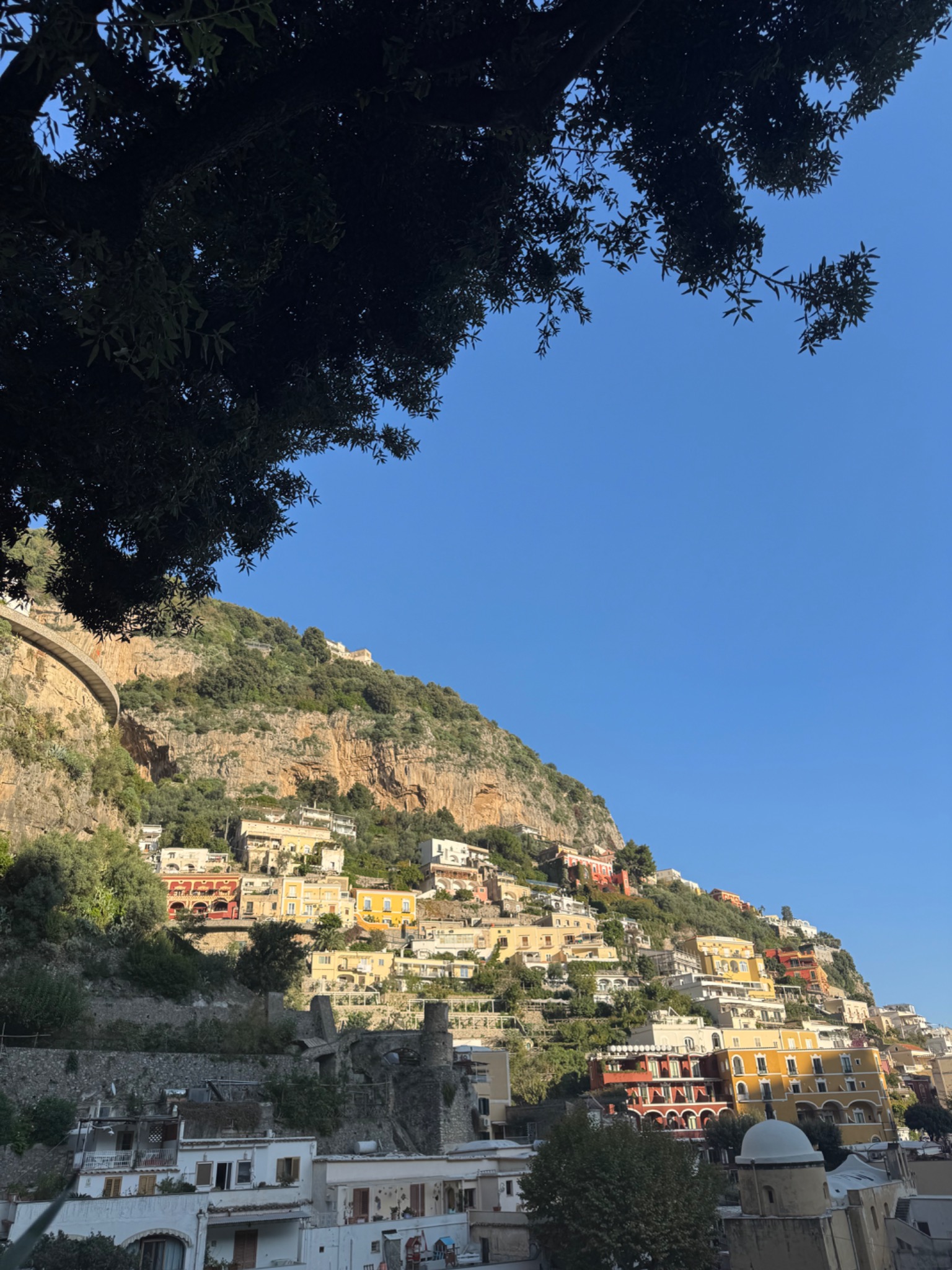
What stays with me is less the architecture than the warmth around it—the way evening color moves across sea, stone and hillside until the divisions between them begin to soften.
The Mediterranean can be visually overwhelming. There is color everywhere: painted buildings, vegetation, water, rock and an intensity of light that seems to alter each of them. Yet what I remember afterward is usually much simpler.
I remember the temperature of the light and the way distance seemed to hold color rather than remove it.
Light changes the structure
In strong coastal light, forms can appear sharply defined. Later in the day those same forms begin to merge. Edges soften, shadows lengthen and colors that seemed separate start to influence one another.
That transition interests me more than architectural detail. It allows the painting to move away from description and toward atmosphere.
I remember the warmth around the place before I remember the place itself.
Color after the journey
Memory rarely preserves an exact color. It preserves a relationship: the warmth of stone against cooler water, a bright wall against a shadowed hillside, the last orange light against an approaching blue.
Back in the studio I allow those relationships to become stronger if the painting needs them. Accuracy is useful at the beginning, but it is not the final measure.
Distance and atmosphere
Coastal landscapes also contain enormous changes of scale. A village can feel intimate while the sea beside it feels limitless. Paint can hold both sensations at once.
That is what I want from these paintings—not a souvenir of a destination, but something of the warmth, distance and atmosphere that remained after I came home.