
ON THE ROAD · OBSERVATION · MEMORY · PLACE
Why the Journey Comes First
A landscape rarely becomes a painting for me simply because it is beautiful. What matters is whether something about the experience stays behind after I have left.
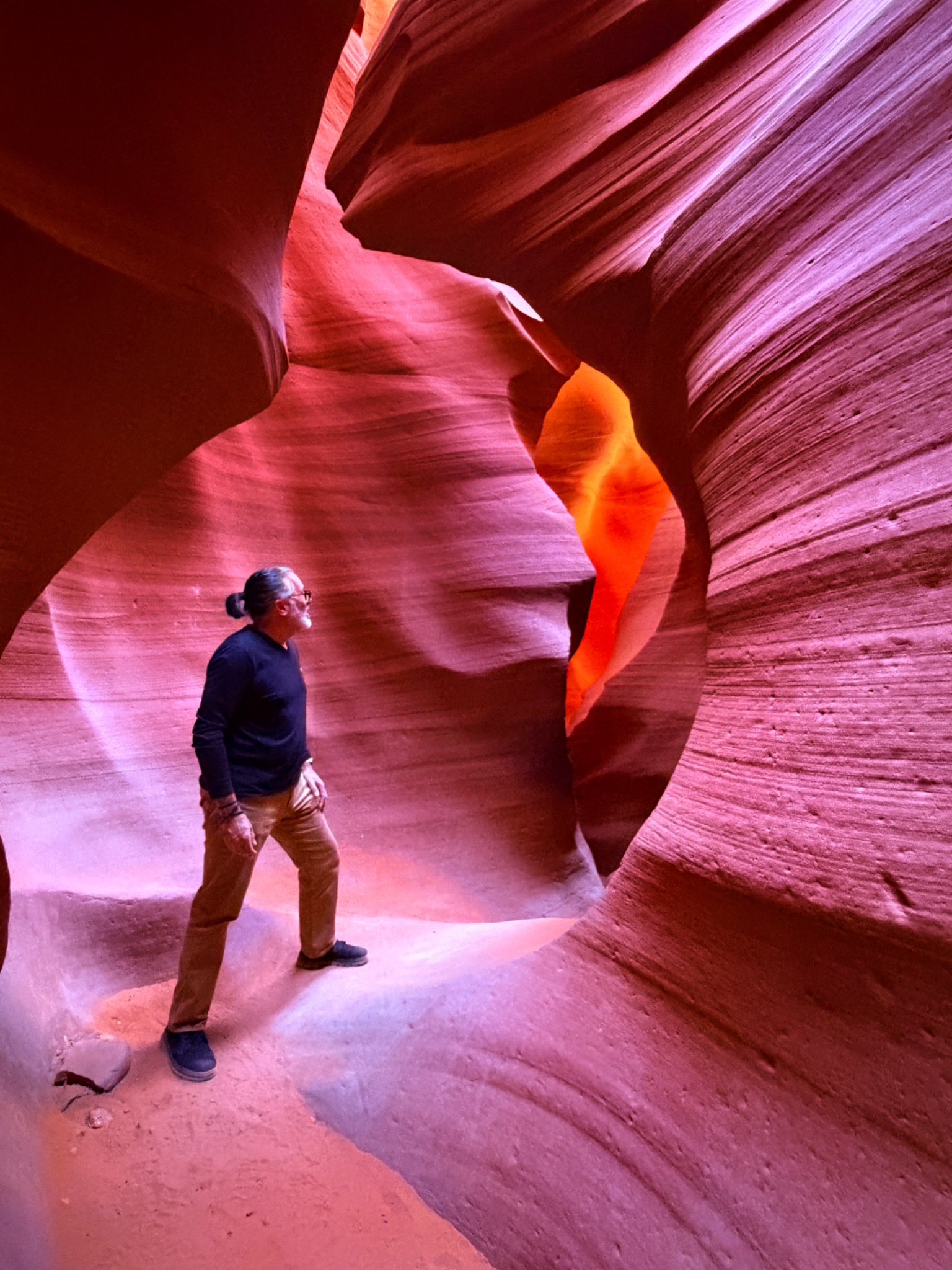
A landscape rarely becomes a painting for me simply because it is beautiful. What matters is whether something about the experience stays behind after I have left.
It might be the way late light moves across a distant ridge, the silence beside a river, the scale of an open landscape, or a change in weather that makes a familiar view suddenly feel unfamiliar. These are often small things. They are also the things a photograph has the greatest difficulty preserving.
I take photographs when I travel. They are useful records of structure, color and place. But I have never wanted the finished painting to become an enlarged version of the photograph. If that were the objective, the photograph would already have done the job.
Looking before painting
The journey matters because being somewhere changes the way I look. I notice where the light is coming from, how distance changes color, what the weather is doing to the atmosphere and which parts of the landscape my eye keeps returning to.
That act of looking is more important to me than collecting reference material. The experience begins to establish a hierarchy: this mattered; that did not. One passage becomes vivid while another almost disappears. Long before there is a canvas, the landscape is already being edited.
The photograph records the moment. The painting discovers what the moment became.
What memory changes
Time away from a place is not necessarily a disadvantage. Often it is useful. Memory removes information. It simplifies the view and allows certain sensations to become stronger than the literal details that surrounded them.
A color may become warmer in memory. A shadow may feel deeper. The distance between two forms may become less important than the atmosphere that connected them. None of that is geographically precise, but painting is not geography.
I am no longer asking, “What did this place look like?” I am asking, “What was it about being there that I still remember?” Those are very different questions.
When the painting takes over
Back in the studio, photographs and memories provide the beginning, but eventually the painting has to become independent of both. There is always a point when a passage of paint asks for something the reference does not contain—a stronger edge, a quieter area, a different color relationship or simply less information.
That is usually when the work becomes interesting. Brush and palette knife begin to create their own accidents and rhythms. Decisions are made because they strengthen the painting, not because they make it more faithful to the original scene.
For me, that is the purpose of travelling as a painter. I am not trying to bring the landscape home intact. I am gathering experiences that can survive being changed.